PsyArXiv (OSF Preprints) · 2026
Think Political Leader — Think He or She? A Multi-Country Test of a Gender Fair Language Intervention for Stereotype Bias
Inesa Zayets et al., with Suzanne van Gils
Abstract
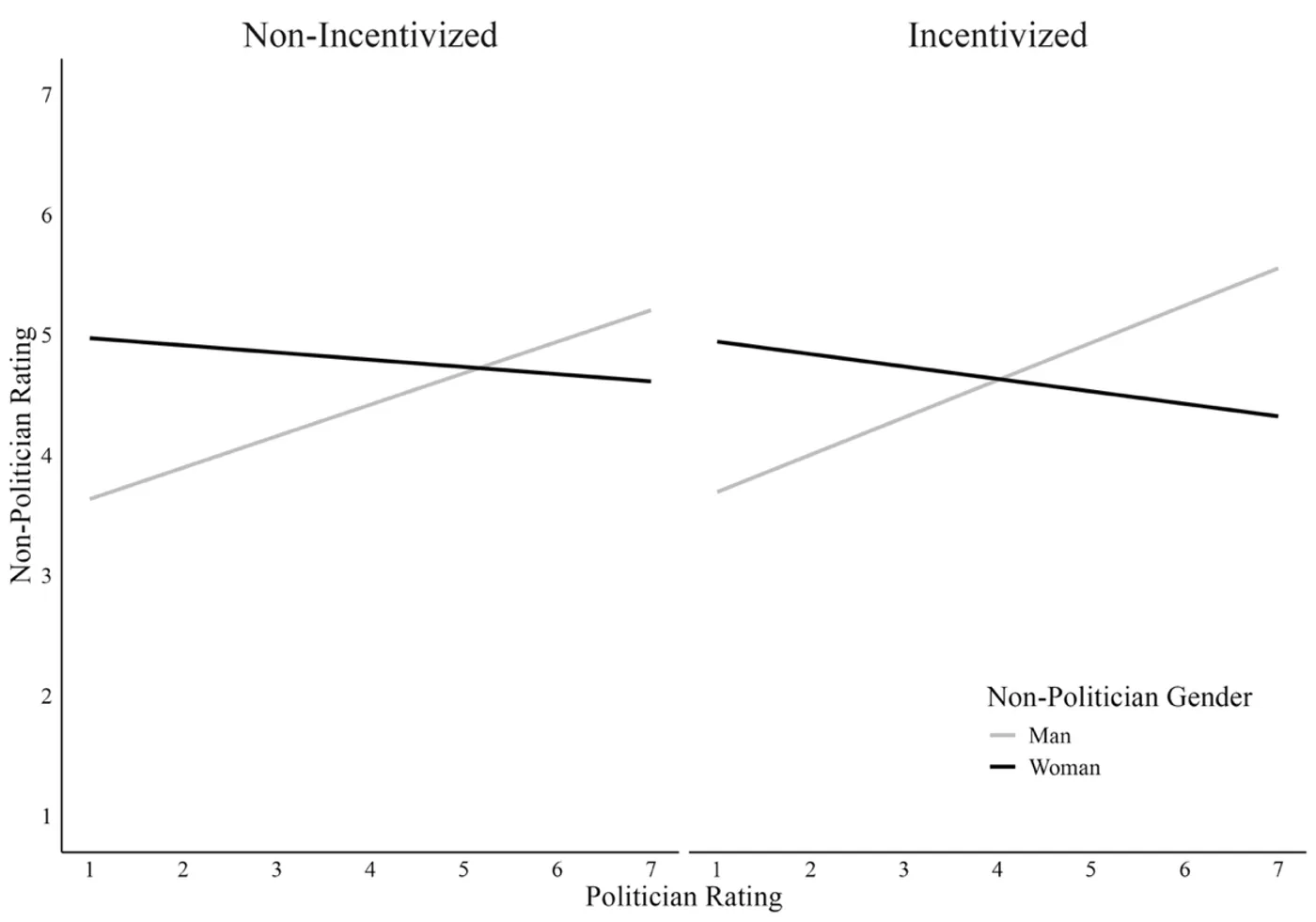
Women are greatly underrepresented in positions of political leadership around the world. In seeking to explain this underrepresentation, some researchers have pointed to people’s tendencies to stereotype leaders as more similar to men than women as these tendencies can support the belief that women are unsuited to leadership. This project aimed to test whether a subtle linguistic intervention was able to ameliorate this gender bias in political leadership stereotypes across different languages and national contexts (country N = 42, sample N = 22,995). Specifically, this project examined whether gender fair language (e.g., the use of paired pronouns ‘he or she’) can reduce the tendency for people to stereotype political leaders as more similar to men than women. To increase the rigor with which these stereotypes were measured, this project complemented the dominant ‘cheap talk’ measure of personal stereotype content with a novel incentivised community measure of this content. As expected, participants stereotyped political leaders as more similar to men than women; this pattern was stronger on the incentivised measure of community stereotypes. Unexpectedly, there was no evidence that paired pronouns reduced this bias (there was weak exploratory evidence that paired nouns increased participants’ tendencies to stereotype political leaders as more similar to women). This project suggests that the ability of gender fair language interventions to ameliorate gender bias in the political leadership domain may be limited.
Read the full article ↗ Read more →