New paper: how climate change can feed violent extremism
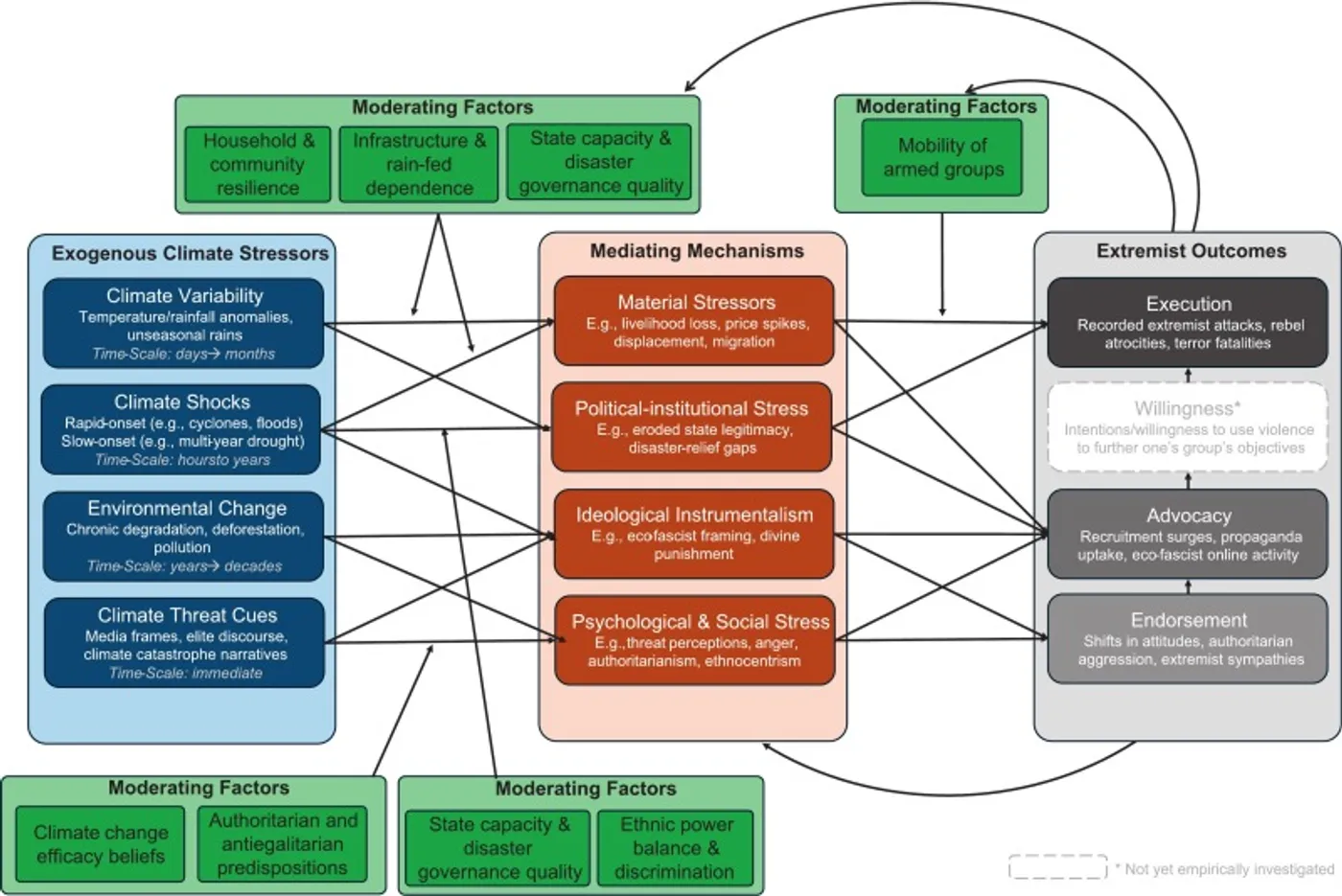
A new preregistered systematic review in Global Environmental Change synthesizes 45 studies into an integrated model of climate-extremism pathways, co-authored by center member Jonas R. Kunst. It frames climate change as a threat multiplier operating through material, institutional, psychological, and ideological mechanisms, and outlines targeted interventions and anticipatory governance strategies.
A preregistered systematic review synthesizing 45 cross-disciplinary studies into an integrated model of how climate change links to violent extremism. It finds that climate variability tracks terrorist attack frequency, climate shocks open governance vacuums that extremist organizations exploit, environmental degradation feeds extremist narratives, and climate threat cues raise authoritarian attitudes and out-group hostility—effects moderated by state capacity, community resilience, and pre-existing ideologies. The model treats climate change as a threat multiplier rather than a direct cause, distinguishing extremist endorsement, advocacy, willingness, and execution.