

An integrated model of climate and environmental pathways to violent extremism
In brief
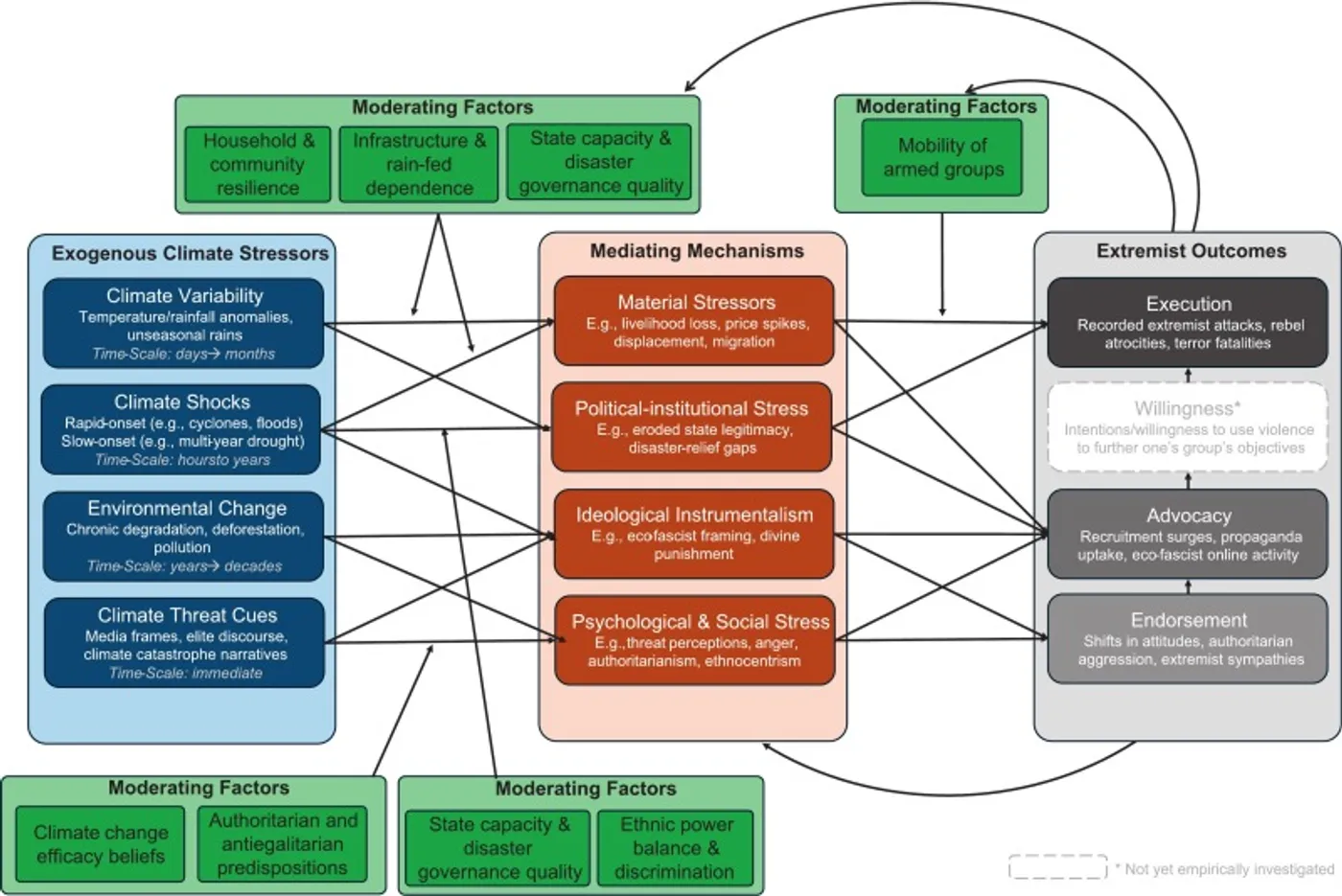
A preregistered systematic review synthesizing 45 cross-disciplinary studies into an integrated model of how climate change links to violent extremism. It finds that climate variability tracks terrorist attack frequency, climate shocks open governance vacuums that extremist organizations exploit, environmental degradation feeds extremist narratives, and climate threat cues raise authoritarian attitudes and out-group hostility—effects moderated by state capacity, community resilience, and pre-existing ideologies. The model treats climate change as a threat multiplier rather than a direct cause, distinguishing extremist endorsement, advocacy, willingness, and execution.
Abstract
Climate change and violent extremism represent intersecting global threats, yet their relationship remains under-examined. This preregistered systematic review synthesizes 45 studies across disciplines to develop an integrated conceptual model of climate-extremism pathways based on the current literature. Our synthesis shows that climate variability correlates with terrorist attack frequency, climate shocks create governance vacuums exploited by extremist organizations, environmental degradation fuels extremist narratives, and climate threat cues increase authoritarian attitudes and out-group hostility. These pathways are moderated by various factors including state capacity, community resilience, and pre-existing ideologies. Our proposed Integrative Climate-Extremism Model distinguishes between extremist endorsement (attitudinal support), advocacy (recruitment and propaganda), willingness (behavioral intentions), and execution (violent acts), outlining how each is influenced by different pathways. This synthesis reveals climate change as a threat multiplier rather than direct cause of violent extremism, operating through material, institutional, psychological, and ideological mechanisms. We identify critical research gaps, propose targeted interventions to disrupt climate-extremism pathways, and discuss anticipatory governance strategies.
Read the full article ↗ DOI: 10.1016/j.gloenvcha.2026.103240