

Meta-Analytic Evidence for an Ecological Account of the Relationship between Acculturative Stressors and Adaptation
In brief
Two pre-registered meta-analyses test how context shapes the link between acculturative stressors and migrants’ adaptation to receiving societies. Drawing on cross-sectional data (k = 229, N = 66,409) and longitudinal data (k = 22, N = 8,555), the study finds that structural conditions such as poverty, inequality, and unemployment intensify stressor–adaptation associations, that moving from collectivistic to individualistic societies strengthens them for socio-cultural adaptation, and that these associations weaken the longer migrants reside in the receiving country.
Abstract
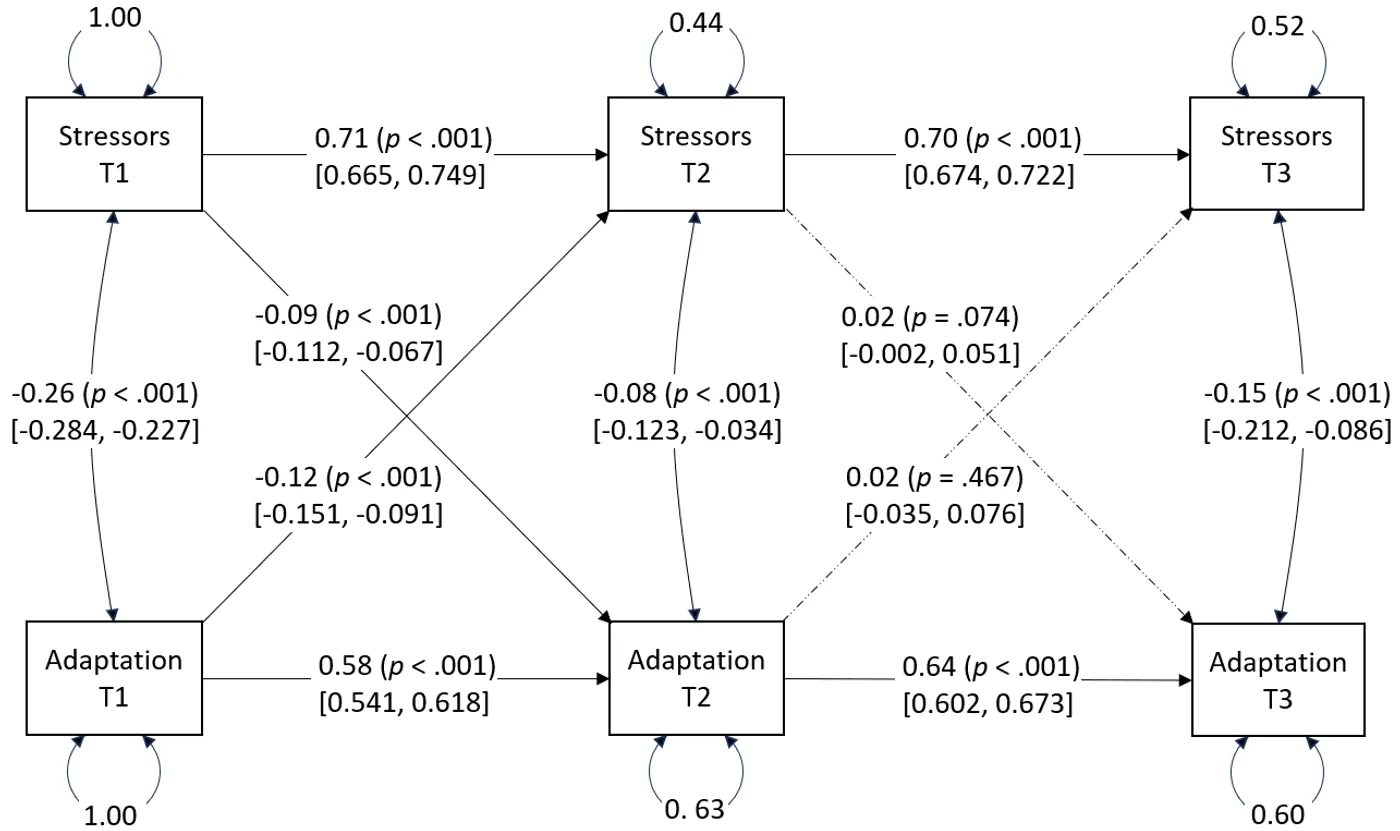
Acculturative stressors, reliably associated with poor migrant adaptation to receiving societies, are highly context-dependent. Yet, how context shapes the stressor-adaptation relationship remains poorly understood. In two pre-registered meta-analyses, we tested the moderating role of structural, cultural, and temporal factors in cross-sectional data (Study 1) and examined the temporal dynamics in longitudinal data (Study 2). Study 1 (k = 229, N = 66,409) modelled origin and receiving country contexts simultaneously to test specific migration routes. Structural factors, such as the receiving country’s poverty, inequality, and unemployment, intensified stressor-adaptation associations. Effects of cultural factors mostly concerned socio-cultural adaptation, most notably stronger stressor-adaptation associations when migrants moved from collectivistic to individualistic societies. For temporal context, longer residence in the receiving country was linked to weaker stressor-adaptation associations. Study 2 (k = 22, N = 8,555) validated the cross-sectional finding that stressor-adaptation associations attenuate over time: effects were stronger and reciprocal at earlier timepoints.