

Managing Algorithmic Accountability: Balancing Reputational Concerns, Engagement Strategies, and the Potential of Rational Discourse
In brief
A conceptual analysis of how organizations can manage accountability for the algorithms they deploy, balancing reputational concerns against genuine engagement. Drawing on discourse ethics, it argues that rational public dialogue—not defensive communication—is the route to legitimate algorithmic accountability.
Abstract
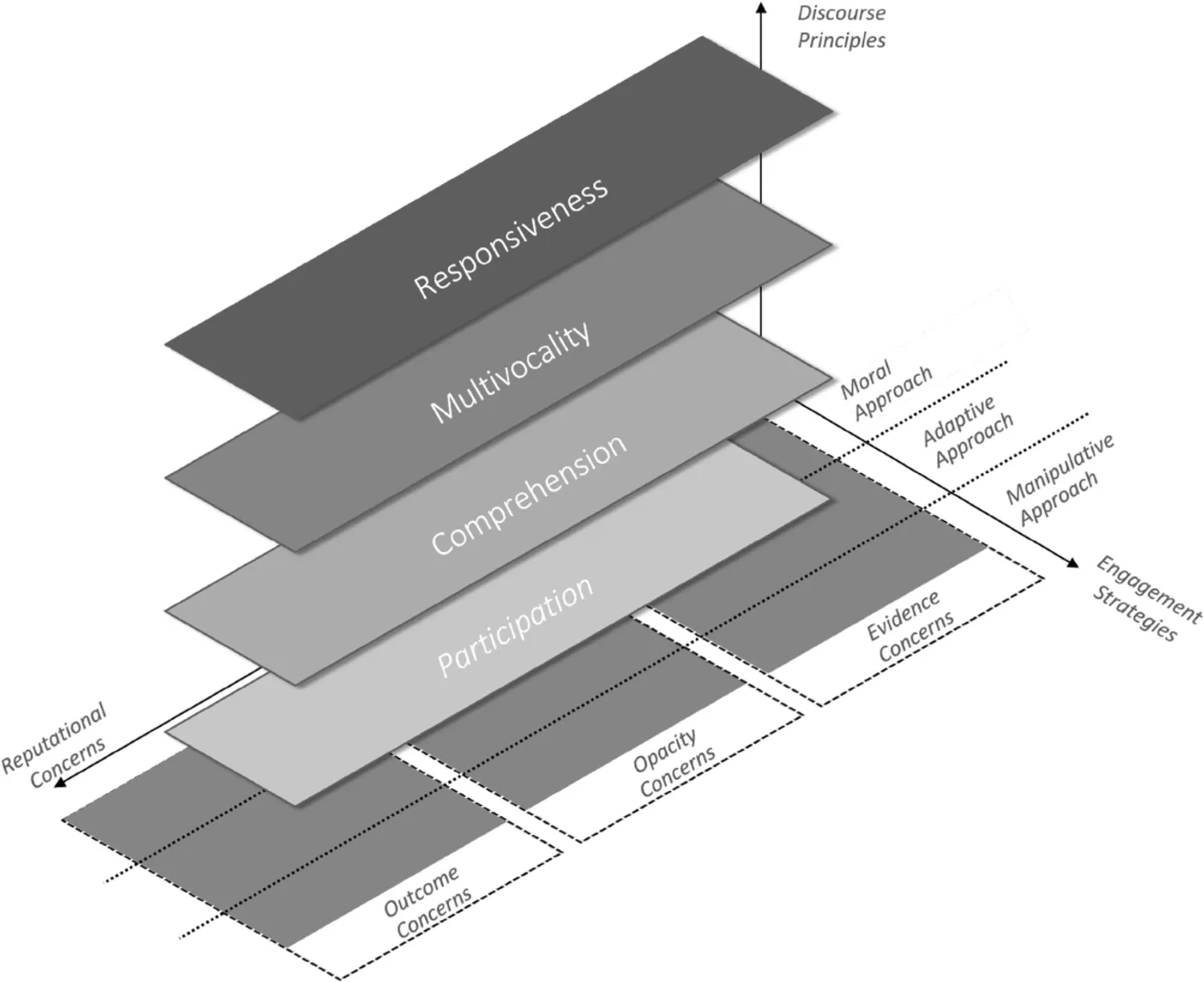
While organizations today make extensive use of complex algorithms, the notion of algorithmic accountability remains an elusive ideal due to the opacity and fluidity of algorithms. In this article, we develop a framework for managing algorithmic accountability that highlights three interrelated dimensions: reputational concerns, engagement strategies, and discourse principles. The framework clarifies (a) that accountability processes for algorithms are driven by reputational concerns about the epistemic setup, opacity, and outcomes of algorithms; (b) that the way in which organizations practically engage with emergent expectations about algorithms may be manipulative, adaptive, or moral; and (c) that when accountability relationships are heavily burdened by the opacity and fluidity of complex algorithmic systems, the emphasis of engagement should shift to a rational communication process through which a continuous and tentative assessment of the development, workings, and consequences of algorithms can be achieved over time. The degree to which such engagement is, in fact, rational can be assessed based on four discourse-ethical principles of participation, comprehension, multivocality, and responsiveness. We conclude that the framework may help organizations and their environments to jointly work toward greater accountability for complex algorithms. It may further help organizations in reputational positioning surrounding accountability issues. The discourse-ethical principles introduced in this article are meant to elevate these positioning contests to extend beyond mere adaption or compliance and help guide organizations to find moral and forward-looking solutions to accountability issues.