

Professional and community-based fact-checking show different strengths, but neither performs strongly across trust, scalability, and impact
In brief
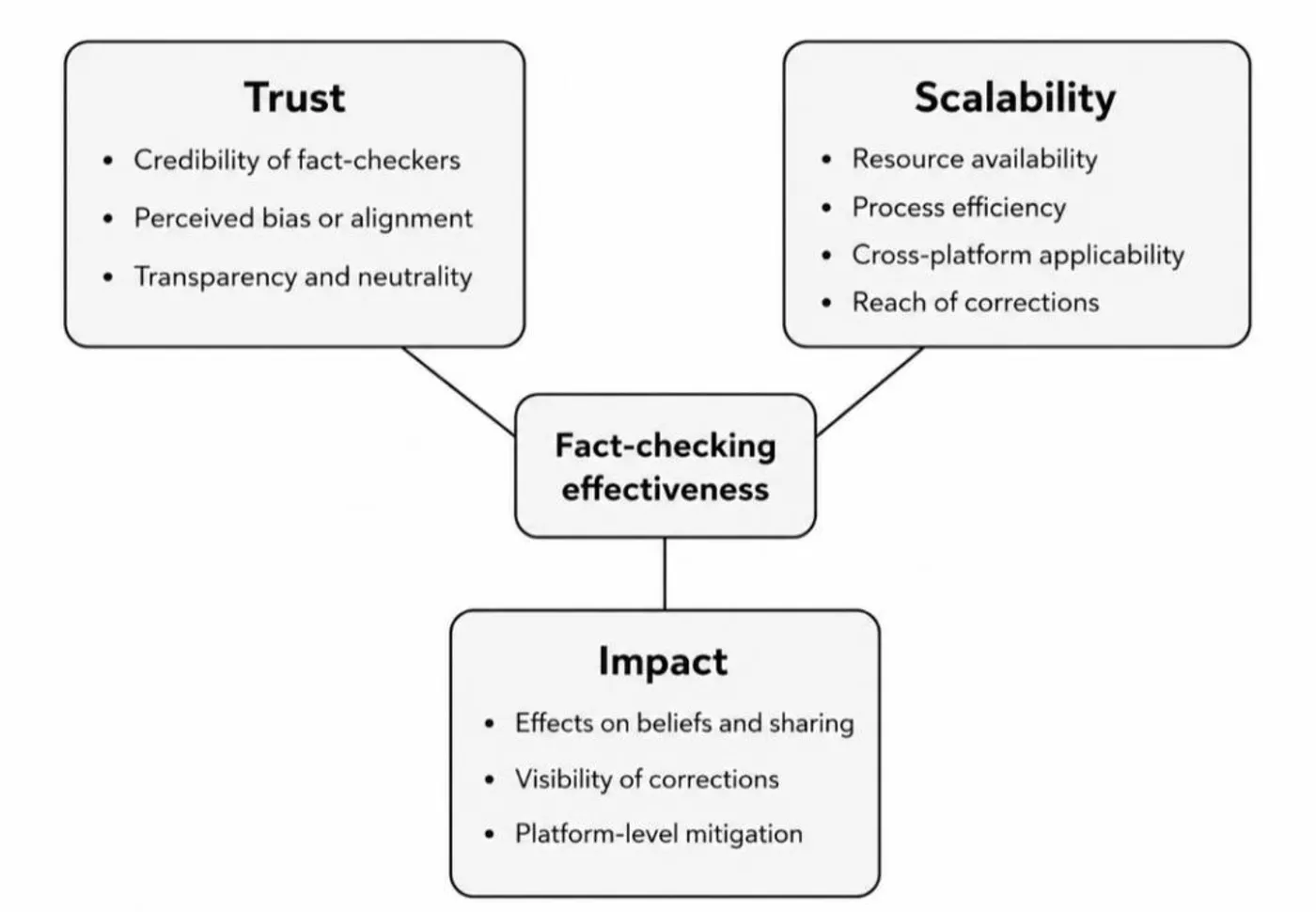
A systematic review of 21 empirical studies of social media fact-checking (2022–2025), prompted by Meta's 2025 shift from professional fact checkers to crowd-sourced annotations. Community-based fact-checking is faster and more scalable, while professional fact checkers are generally more trusted but often slow; neither model alone performs strongly across trust, scalability, and impact. The evidence points to hybrid systems—combining community speed with expert verification—as the most effective approach.
Abstract
Fact-checking on social media matters more than ever. When Meta abandoned professional fact checkers in 2025 in favour of crowd-sourced annotations, it bet that community participation could substitute for institutional expertise. Our systematic review of 21 empirical studies of social media fact-checking (2022–2025) suggests the picture is more complicated than it appears. Community-based fact-checking is faster and scalable, whereas professional fact checkers are generally more trusted but often slow. Neither model, on its own, performs strongly across trust, scalability, and impact. The evidence suggests that hybrid systems combining community speed with expert verification are likely to be the most effective approach.