

Misplaced Certainty in Elite Political Rhetoric Predicts Support for Political Violence
In brief
Five preregistered studies—spanning historical analyses, large-scale social-media data, and experiments—ask whether leaders asserting evidence-defying claims as certain fact fuels support for political violence. Misplaced certainty in elite rhetoric tracked later increases in violent political events, spread further online, and experimentally raised support for political violence along with its precursors: affective polarization, moral outrage, and perceived threat.
Abstract
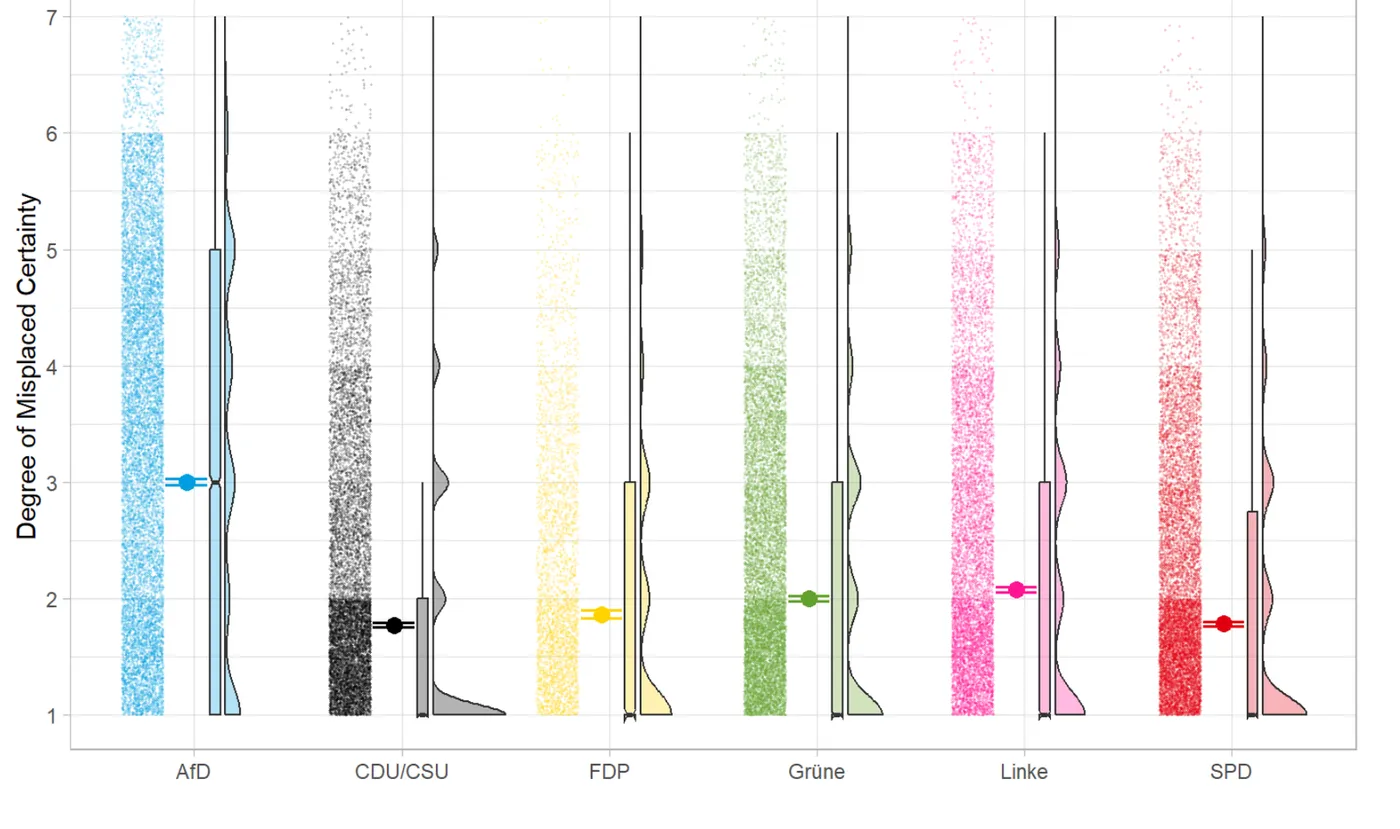
Democracies depend on shared standards of reality. We investigated whether misplaced certainty in political leaders’ rhetoric—the assertion of evidence- and consensus-defying claims as facts—heightens support for political violence. Across five preregistered studies combining historical analyses, large-scale social media data, and experiments, misplaced certainty in elite political rhetoric was associated with subsequent increases in violent political events, predicted greater diffusion and violence-supportive responding online, and experimentally increased support for political violence and its psychological precursors—affective polarization, moral outrage, and perceived threat. These patterns were observed beyond rhetorical certainty and inaccuracy alone, and generalized across diverse political parties, leaders, participant characteristics, and rhetorical features. Together, the findings reveal that the societal consequences of false claims in elite political rhetoric depend not only on their inaccuracy, but on the epistemic stance with which leaders present them.