

Respectful leadership: Reducing performance challenges posed by leader role incongruence and gender dissimilarity
In brief
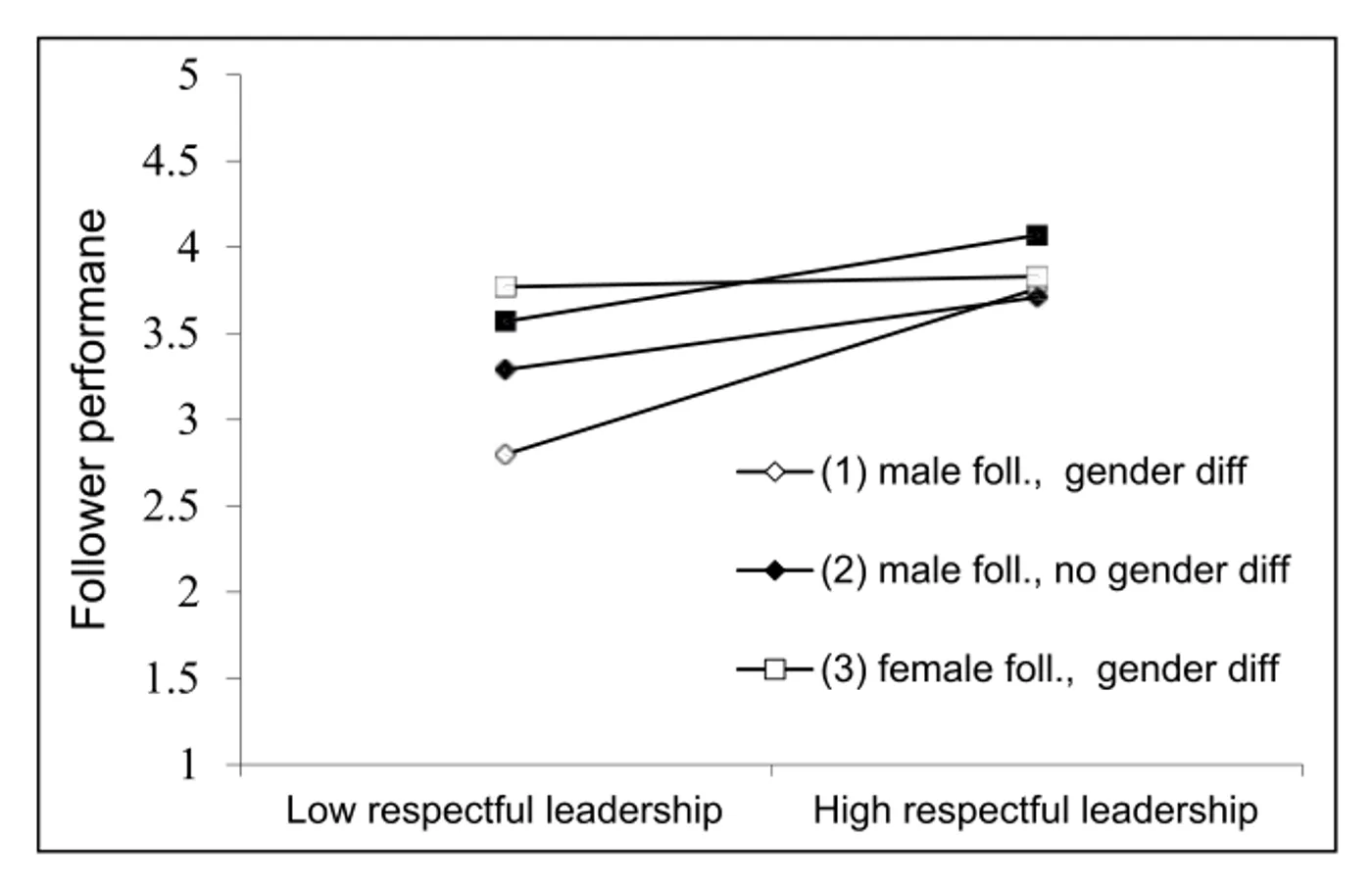
A multi-source field study (N = 214) of how respectful leadership affects follower performance for female leaders, who face role-incongruity biases. Respectful leadership proved effective for female leaders regardless of follower gender—supporting role-congruity theory over gender-dissimilarity accounts.
Abstract
We investigate how respectful leadership can help overcome the challenges for follower performance that female leaders face when working (especially with male) followers. First, based on role congruity theory, we illustrate the biases faced by female leaders. Second, based on research on gender (dis-)similarity, we propose that these biases should be particularly pronounced when working with a male follower. Finally, we propose that respectful leadership is most conducive to performance in female leader–male follower dyads compared with all other gender configurations. A multi-source field study ( N = 214) provides partial support for our hypothesis. While our hypothesized effect was confirmed, respectful leadership seems to be generally effective for female leaders irrespective of follower gender, thus lending greater support in this context to the arguments of role congruity rather than gender dissimilarity.