

Explaining voter turnout: A meta-analysis of national and subnational elections
In brief
A meta-analysis of 185 aggregate-level studies of voter turnout, comparing what moves participation in national versus subnational elections. Election closeness, campaign spending, and registration and voting rules are among the most consistent predictors, with population characteristics weighing more heavily in local contests.
Abstract
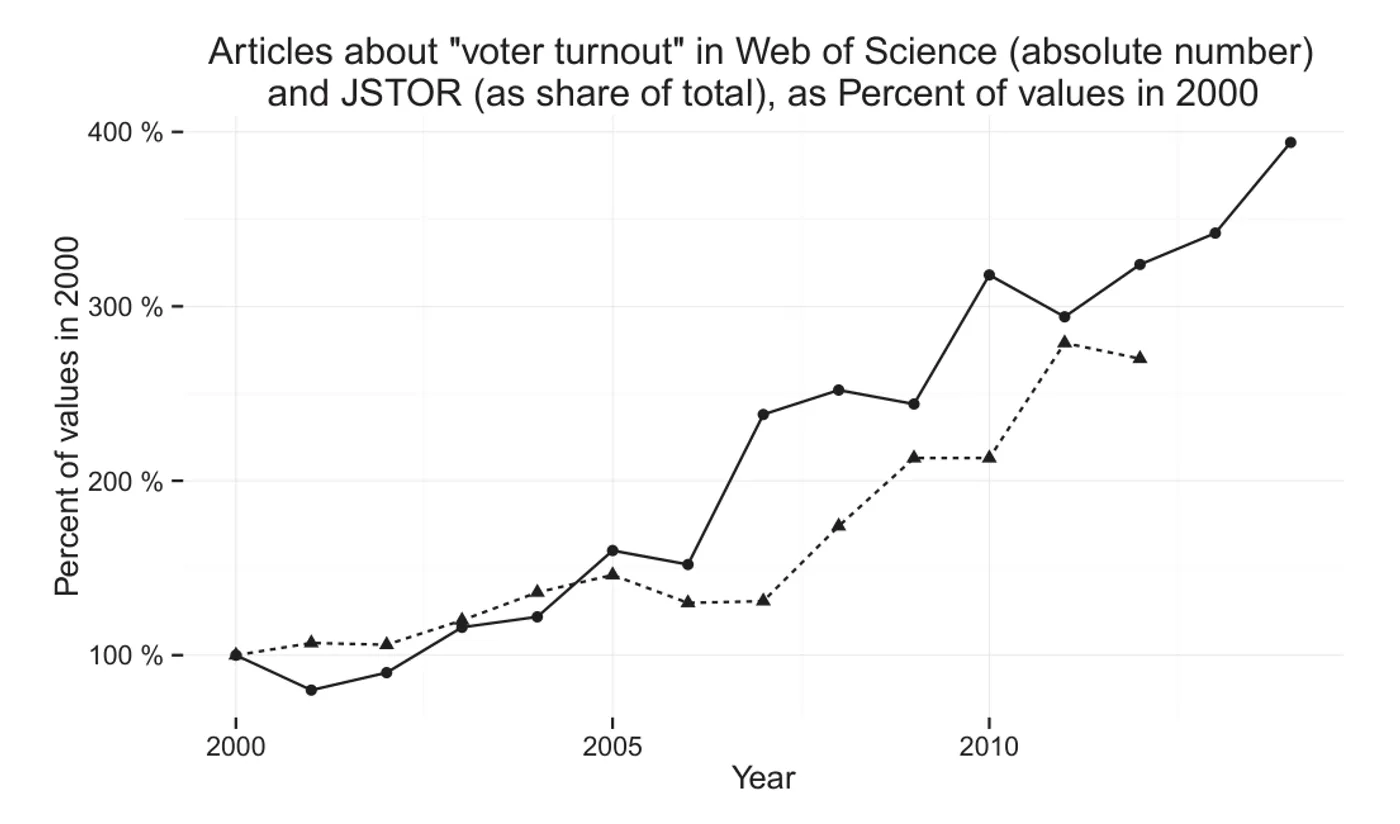
Research about voter turnout has expanded rapidly in recent years. This article takes stock of this development by extending the meta-analysis of Geys (2006) in two main ways. First, we add 102 studies published between 2002 and 2015 to the initial sample of 83 studies. Overall, we document only minor changes to the original inferences. Second, since different processes might conceivably play at different levels of government, we exploit the larger sample to separately analyse the determinants of voter turnout in national versus subnational elections. We find that campaign expenditures, election closeness and registration requirements have more explanatory power in national elections, whereas population size and composition, concurrent elections, and the electoral system play a more important role for explaining turnout in subnational elections.
Read the full article ↗ DOI: 10.1016/j.electstud.2016.03.005